MP Salma Zahid response to CDI Open Letter

Following our open letter to Member of Parliament Salma Zahid regarding concerns raised by members of the Iranian Canadian community, we received the attached response addressing the issues outlined in our correspondence. In the interest of transparency and informed public dialogue, we are publishing Ms. Zahid’s response in full so that members of the community may review her explanations and draw their own conclusions. We appreciate Ms. Zahid’s willingness to respond and engage with the concerns that were brought to her attention. As always, CDI remains committed to fostering respectful dialogue, accountability, and the informed participation of Iranian Canadians in matters of public interest.


 June 1st, 2026

 Hello Dr. Zandi,

Thank you for your note, and the opportunity to provide clarification on this situation.

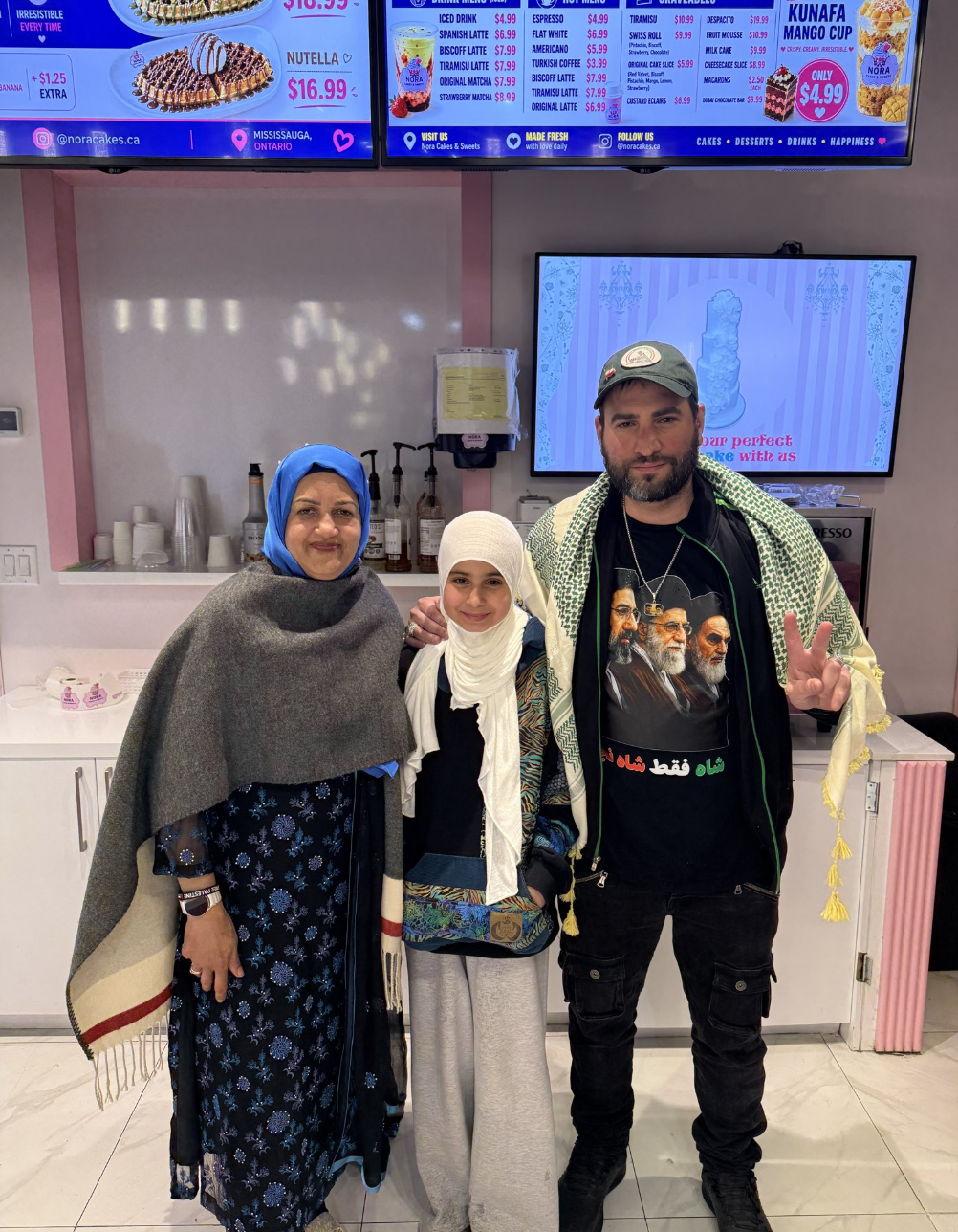
Allow me to reiterate once more that I did not know this person, their history or their views. They also hid their shirt from me. I am told this person has a history of ambushing politicians in this way.

I was approached by a young girl in a restaurant with my family who asked for a photo, and this person was with her. I took the photo and tried to return to my family.

We did not have a conversation. I think you would agree given his history that he is not a reliable narrator. He spoke, and I tried to politely excuse myself to return to my waiting family.

I have had no conversations with CBSA or Public Safety regarding anything to do with Iran. The IRGC is a banned terrorist group and its members are not admissible to Canada.

You may be familiar with the Muslim Association of Canada, and their concerns about speakers invited to their recent MAC Convention who were stopped from entering Canada due to their statements regarding Palestine and the situation in Gaza. I believe this was the context of his comments.

This issue has been raised with me by a number of my constituents. My concern was to ensure there is and was due process and procedural fairness. What I told both public safety officials and my constituents is that I believe in the need for fairness and evidence-based decision making in these and all cases.

And I emphasized to constituents that CBSA operates independently and is responsible for making admissibility decisions at the border in accordance with Canadian law. Elected officials are not able to influence individual admissibility decisions. This this is how it should and must be.

I trust this provides further helpful clarity.

Yours sincerely,

Salma

Salma Zahid

Member of Parliament for Scarborough Centre-Don Valley East

CDI letter to The Honourable Salma Zahid: Request for Clarification Regarding Publicly Shared Post Concerning CBSA DecisionsMay 28, 2026 The Honourable Salma Zahid House of Commons Ottawa, Ontario CC: The Honourable Gary Anandasangaree Subject: Request

May 28, 2026

The Honourable Salma Zahid

House of Commons

Ottawa, Ontario

CC: The Honourable Gary Anandasangaree

Subject: Request for Clarification Regarding Publicly Shared Post Concerning CBSA Decisions

Dear MP Zahid,

We hope this letter finds you well.

Canadians for Democracy in Iran (CDI) is a group of concerned Canadian citizens and activist who care deeply about the integrity of Canada’s democratic institutions, public safety, and the prevention of foreign influence and extremist ideologies within our society.

We recently became aware of a social media post circulating online regarding your interaction with Mr. Firas Al Najim, including a photograph and accompanying statements attributed to him. In his post, he claimed that during your conversation, you indicated that you are “solving” the entry ban implemented by CBSA for few individuals who could not enter Canada due to CBSA’s inadmissibility criteria.

We also noted your subsequent public clarification stating that you were unaware of the imagery displayed on Mr. Al Najim’s shirt (portraits of Islamic Republic of Iran’s former supreme leaders and the current one) at the time the photo was taken, and that you would not have agreed to the photo had you noticed it. We appreciate and acknowledge that clarification. For your information, Mr. Al Najim is a known activist who has publicly supported Hamas and has a history of harassing the Iranian and Jewish communities in Canada. He was removed from TikTok for posting antisemitic remarks.  He was also arrested in 2022 for driving dangerously towards protesters in support of the Women Life Freedom movement in Iran.

https://globalnews.ca/news/9222222/markham-driver-charged-protest/

However, your response did not address the statement regarding the Canada Border Services Agency (CBSA) matter in Mr. Al Njim’s post, which has generated understandable public concern. As you are aware CBSA decisions relating to inadmissibility are serious matters connected to security screening, immigration law, and the protection of Canada’s national interests and public safety. Public confidence in those processes is extremely important. Given the sensitivity of the issue, we the undersigned, respectfully ask for clarification on the following points:

1.   What specifically was meant by the statement that you were “solving” the issue involving individuals reportedly inadmissible to enter Canada?

2.   Were you referring to a routine constituency or administrative inquiry, or were any representations made on behalf of the individuals who had been denied entry to Canada?

3.   Were you aware of any concerns, red flags, or allegations connected to the individuals reportedly prevented from entering Canada?

4.   Did your office communicate in any capacity with CBSA, Immigration, Refugees and Citizenship Canada (IRCC), or any other federal department regarding these individuals?

5.   More broadly, what safeguards do you believe should exist to ensure that elected officials are not perceived as intervening in matters involving legal and security processes concerning individuals connected to extremist rhetoric or foreign ideological influence?

We believe these questions can be addressed respectfully and transparently in a manner that reassures the public and reinforces confidence in Canada’s institutions and protection of our Canadian values of democracy, human rights, public safety, and the rule of law.

Thank you for your attention to this matter. We would appreciate a timely response.

Respectfully,

Farrokh Zandi, PhD
Chairman,
Canadians for Democracy in Iran

https://www.cdi-org.ca/

Co-Signed by:

Organizations:

  • Iranian Canadian Legal Professionals (ICLP)
  • Iranian Women Organization of Ontario (IWOO)
  • 1Kalameh Network

Individuals:

  • Arsalan Kahnemuyipour – Professor and Chair, Department of Language Studies, University of Toronto Mississauga
  • Babak Payami – Filmmaker
  • Bahram Jalayer - Community Activist and Management Consultant
  • Farid Rohani – Former Chair Laurier Institution

Kaveh Shahrooz – Lawyer and human rights activist, senior fellow at the Macdonald-Laurier Institute

Re: Global News Article dated April 2, 2026, “Iranian facing deportation for sanctions evasion tries to sponsor mother to immigrate”

April 17, 2026

The Iranian Canadian Legal Professionals (ICLP) is a national organization representing over 400 Canadian lawyers, law students, and court translators of Iranian heritage. The above referenced article as reported by Stewart Bell (Link below) indicates that while AminYousefijam is facing deportation for violating sanctions against Islamic Republic of Iran, he has filed a court case against the Canadian government for rejecting his attempt sponsor his mother to immigrate. On April 1st, 2025 he registered a letter under Court File No. IMM-1674-26 requesting the Court to make an order that all files will be anonymized. We wish to express our grave concern with granting such an order by federal court to any files associated with Amin Yousefijam.

Canada’s court proceedings are presumptively public for a reason: transparency is essential to public safety and confidence, and the rule of law. Justice not only has to be done but must be seen to be done. The open-court principle is constitutionally protected under section 2(b) of the Canadian Charter of Rights and Freedoms (freedom of expression, including freedom of the press). As the Supreme Court of Canada has repeatedly affirmed, any restriction on openness—such as anonymization or sealing of court files—must overcome a stringent threshold: it must be necessary to prevent a serious risk to an important public interest, no reasonable alternative must exist, and the benefits of the restriction must outweigh its deleterious effects on transparency and public confidence in the administration of justice (Sherman Estate v. Donovan, 2021 SCC 25; Canadian Broadcasting Corp. v. Named Person, 2024 SCC 21; Canadian Broadcasting Corp. v. New Brunswick (Attorney General), [1996] 3 S.C.R. 480).

Under Rule 151 of Federal Court Rules, the court must be satisfied that the material should be treated as confidential, notwithstanding the public interest in open and accessible court proceedings. This statutory requirement reflects the common-law test established by the Supreme Court of Canada in Sierra Club of Canada v. Canada (Minister of Finance), 2002 SCC 41, [2002] 2 S.C.R. 522, which holds that a confidentiality order may be granted onlywhere the salutary effects of the order outweigh its deleterious effects on the open-court principle

The individual at the center of this case, Amin Yousefijam (also known as Ameen Cohen) has previously changed his name twice, including following a conviction in the United States for violating sanctions laws related to the Islamic Republic of Iran, to hide his identity. We believe the court should not facilitate his efforts to anonymize his court cases from public and media. Matters of this nature engage significant public interest and considering the challenging times the Iranian Canadian community is experiencing, transparency of the judicial system is even more paramount. Appearance of justice is as crucial as its actual administration to maintain public confidence.

Secrecy in immigration cases or judicial reviews involving individuals with known ties to the Islamic Republic regime, jeopardizes public’s trust in our institutions, Canadian justice system and the rule of law. In this context, the public interest in transparency is especially acute, consistent with the Supreme Court’s recognition that open justice safeguards the rule of law and public confidence (Edmonton Journal v. Alberta (Attorney General), [1989] 2 S.C.R. 1326).

We therefore call on the federal court to keep the proceedings public as they are inherently meant to be in our free and democratic society. Alternatively, if the court determines that any resections must be granted in this case, after applying the Sierra Club and Sherman Estate tests, it should provide a clear public explanation for any restrictions imposed, consistent with the principles of open justice and the constitutional imperative of transparency under s. 2(b) of the Charter.

Yours respectfully,

Rose Bahrami, President

Iranian Canadian Legal Professionals (ICLP)

This email address is being protected from spambots. You need JavaScript enabled to view it. ; www.iclp.ca

Co-Signed by:

Organizations:

CDI - Canadians for Democracy in Iran

IWOO – Iranian Women Organization of OntarioIndividuals:

Afkham Mardukhi - Co-Founder of I2CRC (Intercultural Iranian Canadian Resource Centre)

Dr. Arsalan Kahnemuyipour – Professor and Chair, Department of Language Studies, University of Toronto Mississauga

Dr. Arsalan Mohajer - Founding member and former chair and current Trustee, Canadian Society of Iranian Engineers and Architects (MOHANDES), Retired professor, Director of COHAN Charity

Babak Payami – Filmmaker

Bahram Jalayer - Community Activist and Management Consultant

Farid Rohani – Former Chair Laurier Institution

Maral Karimi –Faculty Lecturer, Department of Politics & Public Administration Toronto Metropolitan University

Mehrdad Ariannejad – CEO, Tirgan

Dr. Reza Moridi – Former Member of Provincial Parliament (MPP), Ontario

Links:

https://globalnews.ca/news/11753869/iranian-facing-deportation-sanctions-evasion-sponsors-mother-immigrate/

After The Attack

March 7, 2026

By Ata Hoodashtian

Source: Eurasia Review (www.eurasiareview.com)

The principal question regarding the attacks by the United States and Israel on the Islamic Republic is what plan the attacking force has in hand after the strike. In the event of the collapse of the Islamic regime, who will be the successor to power?

The extension of the current tension is likely desired neither by the United States, nor by Israel, nor by the countries of the region. None of these states would want a long, turbulent, and costly war. However, a force that carries out such a large-scale attack on the Islamic Republic, if it seeks to remove and eliminate the ruling apparatus, must logically have an alternative up its sleeve. Which alternative?

Future Political Stability as an Attainable Horizon

The force that today is present in the political space inside and outside Iran is Crown Prince Reza Pahlavi. Through his own efforts, the support of the Israeli government, certain news networks, and a significant portion of the Iranian people, he has now emerged as the sole active alternative on the scene. This popularity is necessary, but in terms of political strategy and the determination of the foundations of future political stability of the country, it is still insufficient.

The future alternative for Iran must be able to establish political stability, security, and positive relations with the West and Israel. In this regard, the question is this: under Iran’s current highly sensitive wartime conditions, and given the multiplicity of claimants to power, the particular position of ethnic groups, specifically the armed capacity of Kurdish and Baluch communities and other ethnic groups, as well as other political organizations such as the Mojahedin with decades of political experience, and also Iran’s former prime minister Mir-Hossein Mousavi and the Group of Seventeen, who are in Iran and possess influence, can one simply imagine a stable future after the collapse of the Islamic regime without dialogue and agreement with these groups, or at least the most important once?

If dialogue and agreement with these groups do not take place from now on, despite the activity of all these groups at various levels, the future holders of power will either have to intimidate these forces and drive them out of the ground, a process that would undoubtedly drag Iran into internal conflicts and turmoil, similar to what we saw in Syria, Libya, and other countries, or they must reach an understanding with them (or at least with the most important among them),  so that a future Iran may take shape without tension and with respect for the rights of all claimants to power and all citizens. 

Any agreement, however, must be realized before the transfer of power so that the focus of post-Islamist actions will be solely the reconstruction and development of the country and national security, rather than the endless expenditure of energy and time on resolving disputes, misunderstandings, and drawing lines of confrontation.

All indications are that the United States also seeks precisely this stability and security.

The Danger of Continuing War and the Use of Nuclear Weapons

The war-inclined forces of the ruling regime had repeatedly indicated that if the United States attacked the Islamic Republic, the regime would strike other countries in the region and U.S. bases. And it did so. Yet the noteworthy point is the remarks of Ebrahim Jabbari, adviser to the commander-in-chief of the Revolutionary Guards, on the first day of the war, warning that “we possess weapons that we have not yet shown and will unveil later.” These statements may be nothing more than the Islamic Republic’s habitual exaggerations. But if this claim is placed alongside the remarks of Rafael Grossi, that the Islamic Republic still possesses 400 kilograms of uranium, capable of producing nuclear weapons, one becomes aware of the dangers posed by the Islamic Republic’s jihadist and apocalyptic character: “Iran holds enough uranium to build ten nuclear weapons if it chose to enrich further…”

The Day After the War

If the United States, in its attacks, limits itself to destroying the regime’s military power and its nuclear facilities and remains within these bounds, leaving the finishing of the matter to the people in the streets, there is no doubt that this will not eliminate the regime. The regime will remain and may even find limited means to rebuild itself. In that case, the regime will undoubtedly seek once again to carry out a bloody repression of the people. The day after the war, there must be no trace of the regime. Now that the attacks have begun, the matter must be finished. Leaving this action half-completed would benefit the regime.

Contrary to the statements of Donald Trump and Netanyahu, the people alone do not have the ability to confront even the remnants of the regime. One cannot and must not send unarmed people in front of bullets. The people of Iran are unarmed and lack military training, and in the protests of this year’s Dey month we saw that the regime, without any mercy or compassion, resorted to comprehensive repression. If the recent attacks do not lead to the destruction of the structure of repression, if they do not result in the creation of a strong national political alternative, darkness and oppression will once again continue in Iran.

Canada should support Iranians' efforts to build a post-regime democracy

Iranians deserve freedom from the regime which has violently and horrifically repressed them for over four decades

By Irwin Cotler, Nazanin Afshin-Jam, and Noah Lew

National Post

Mar 03, 2026

On Saturday, the United States and Israel launched a joint operation against the Islamic Republic’s regime in Iran, with the stated https://fddaction.createsend1.com/t/r-l-tkuyhtlt-l-u/", "layout_section": "in-page-link"}" data-evt="click" data-evt-typ="click" auto-tracked="true">goals of preventing Iran from acquiring nuclear weapons and helping the Iranian people topple the repressive regime.

Prime Minister Mark Carney https://www.pm.gc.ca/en/news/statements/2026/02/28/statement-prime-minister-carney-and-minister-anand-situation-middle-east", "layout_section": "in-page-link"}" data-evt="click" data-evt-typ="click" auto-tracked="true">announced Canada’s support for the operation, echoed by the leader of the opposition, Pierre Poilievre. In his statement, Carney expressed Canada’s position as follows:

“The Islamic Republic of Iran is the principal source of instability and terror throughout the Middle East, has one of the world’s worst human rights records, and must never be allowed to obtain or develop nuclear weapons.”

We firmly agree.

For 46 years, the Islamic Republic of Iran has engaged in a continuous dual campaign of internal repression and external aggression.

Upon seizing power through the bloody 1979 revolution, the Islamic Republic immediately began systematically imprisoning, torturing and executing thousands of opposition figures, dissidents, and ethnic and religious minority groups.

In 2024, the United Nations Special Rapporteur on the situation of human rights in the Islamic Republic of Iran, Mr. Javaid Rehman, https://www.ohchr.org/sites/default/files/documents/countries/iran/20240717-SR-Iran-Findings.pdf", "layout_section": "in-page-link"}" data-evt="click" data-evt-typ="click" auto-tracked="true">declared that between 1981-82 and 1988, the Islamic Republic perpetrated “the worst and the most egregious human rights abuses of our living memory whereby high-ranking state officials connived, conspired and actively engaged to plan, order and commit crimes against humanity and genocide against the nationals of their own state.”

The Islamic Republic’s horrific repression of its own citizens has continued unabated until today. The Iranian people have been stripped of their fundamental rights, Iranian women suffer under a gender apartheid and minority groups such as the Baha’i have been systematically targeted and oppressed.

Over the years, the Iranian people have bravely resisted and protested the horrific abuses of the Islamic Republic’s regime. Iranians rose up en masse to advocate for democracy during the https://en.wikipedia.org/wiki/Iranian_Green_Movement", "layout_section": "in-page-link"}" data-evt="click" data-evt-typ="click" auto-tracked="true">Green Movement in 2009. In 2022, Iranian women valiantly launched the https://en.wikipedia.org/wiki/Woman,_Life,_Freedom_movement", "layout_section": "in-page-link"}" data-evt="click" data-evt-typ="click" auto-tracked="true">Woman, Life, Freedom protests in response to the killing of Jina Mahsa Amini for her refusal to wear a hijab. And now, since the end of 2025, the Iranian people have been https://en.wikipedia.org/wiki/2025%E2%80%932026_Iranian_protests", "layout_section": "in-page-link"}" data-evt="click" data-evt-typ="click" auto-tracked="true">engaged in the largest uprising in the history of the Islamic Republic.

In response, the regime has murdered an estimated https://www.theguardian.com/global-development/2026/jan/27/iran-protests-death-toll-disappeared-bodies-mass-burials-30000-dead", "layout_section": "in-page-link"}" data-evt="click" data-evt-typ="click" auto-tracked="true">30,000 people and arbitrarily arrested an estimated https://iranhumanrights.org/2026/02/irans-machinery-of-repression-escalates-arbitrary-arrests-torture-enforced-disappearances-and-death-sentences-after-protest-massacre/", "layout_section": "in-page-link"}" data-evt="click" data-evt-typ="click" auto-tracked="true">53,000, including hundreds of children. Those arrested are subject to torture, forced confessions and execution. When wounded civilians are brought to hospitals, Iranian regime agents have https://edition.cnn.com/2026/02/03/world/video/iran-doctor-underground-medics-network-protest-crackdown", "layout_section": "in-page-link"}" data-evt="click" data-evt-typ="click" auto-tracked="true">murdered them in their hospital beds and https://www.washingtonpost.com/world/2026/02/27/iran-protests-crackdown-hospitals/36de515e-13b7-11f1-8e8d-fe91db44677b_story.html", "layout_section": "in-page-link"}" data-evt="click" data-evt-typ="click" auto-tracked="true">arrested doctors who attempt to help them. These atrocities have continued up until now.

At the same time, the Islamic Republic has exported its atrocities, violence, and repression throughout the Middle East and the world. As Carney https://www.pm.gc.ca/en/news/statements/2026/02/28/statement-prime-minister-carney-and-minister-anand-situation-middle-east", "layout_section": "in-page-link"}" data-evt="click" data-evt-typ="click" auto-tracked="true">said, Iran is “the principal source of instability and terror throughout the Middle East.”

For decades, the Iranian regime has https://www.state.gov/reports/country-reports-on-terrorism-2021/iran", "layout_section": "in-page-link"}" data-evt="click" data-evt-typ="click" auto-tracked="true">funded, trained, supported and directed terrorist proxies throughout the Middle East, including Hamas in Gaza, Hezbollah in Lebanon and Syria, the Houthis in Yemen and multiple Iraqi militia groups. These proxies have committed countless horrific atrocities, massacring civilians and destabilizing their host countries and the region more broadly.

The Iranian regime’s support for terror and atrocities extends far beyond the Middle East. Iran was responsible for the 1994 https://www.congress.gov/119/bills/sres326/BILLS-119sres326is.htm", "layout_section": "in-page-link"}" data-evt="click" data-evt-typ="click" auto-tracked="true">bombing of a Jewish community centre in Buenos Aires, Argentina, which killed 85 people and injured over 300. In January 2020, the Islamic Revolutionary Guard Corps (IRGC) https://www.international.gc.ca/world-monde/issues_development-enjeux_developpement/response_conflict-reponse_conflits/crisis-crises/flight-vol-ps752.aspx?lang=eng", "layout_section": "in-page-link"}" data-evt="click" data-evt-typ="click" auto-tracked="true">shot down Ukraine International Airlines flight PS752, killing all 176 passengers, including 57 Canadians. Since Russia’s criminal invasion of Ukraine began in 2022, Iran has https://apnews.com/article/russia-iran-drones-shahed-ukraine-israel-strikes-3ddeb853845f0ea5f81878165af07bfd", "layout_section": "in-page-link"}" data-evt="click" data-evt-typ="click" auto-tracked="true">supplied weapons including Shahed drones to Russia, which have been used to terrorize and murder Ukrainian civilians. Finally, on Saturday, in his response to the American-Israeli strikes, U.K. Prime Minister Keir Starmer https://www.gov.uk/government/speeches/pm-statement-on-iran-28-february-2026", "layout_section": "in-page-link"}" data-evt="click" data-evt-typ="click" auto-tracked="true">stated that the Iranian regime has been responsible for 20 foiled terrorist attacks in the United Kingdom.

The Islamic Republic is also a leading global source of https://freedomhouse.org/report/transnational-repression/iran", "layout_section": "in-page-link"}" data-evt="click" data-evt-typ="click" auto-tracked="true">transnational repression — the targeting of dissidents, activists, journalists and opposition figures abroad. In October 2018, assassination plots against Iranian opposition figures were foiled in both https://www.nytimes.com/2018/11/01/world/europe/denmark-assassination-iran.html", "layout_section": "in-page-link"}" data-evt="click" data-evt-typ="click" auto-tracked="true">Denmark and https://www.theguardian.com/world/2018/oct/02/france-blames-iran-for-foiled-bomb-attack-near-paris", "layout_section": "in-page-link"}" data-evt="click" data-evt-typ="click" auto-tracked="true">France. In 2021, the FBI foiled an effort to murder https://www.justice.gov/opa/pr/two-russian-mob-leaders-sentenced-25-years-prison-murder-hire-targeting-journalist-behalf", "layout_section": "in-page-link"}" data-evt="click" data-evt-typ="click" auto-tracked="true">Masih Alinejad, an Iranian human rights activist, in New York. And, here in Canada, one of the authors of this op-ed (Irwin Cotler), who has long warned of the Islamic Republic’s massive domestic repression and external aggression, has been under 24/7 police https://www.theglobeandmail.com/politics/article-former-justice-minister-irwin-cotler-warns-iran-may-have-activated", "layout_section": "in-page-link"}" data-evt="click" data-evt-typ="click" auto-tracked="true">protection due to the Islamic Republic’s ongoing efforts to murder him since 2023.

The Iranian people deserve better. They deserve freedom from the regime which has violently and horrifically repressed them for over four decades. They deserve justice, democracy and a peaceful, human rights-respecting government.

Carney has made clear that Canada will not enter this conflict militarily. Instead, Canada should work with the United States, Israel, the community of democracies, and most importantly, the Iranian opposition, to start preparing for the day after the Islamic Republic.

Canada can and should play a role in supporting the Iranian people in their efforts to build a free and democratic Iran. We should be in contact with, provide resources and international legitimacy to the Iranian opposition. We should help them build the country that they deserve.

Transformation Of Political Leadership Models In Twenty-First Century

Feb 28, 2026

By: Ata Hodashtian

Source: Eurasia Review (www.eurasiareview.com)

Introduction

Structural transformations in the contemporary world, particularly the expansion of networked digital communications, the erosion of overarching ideological authorities, the increasing complexity of social fabrics, and the evolution of global market economies, has led to a fundamental redefinition of political leadership.

In the twentieth century, leadership was largely understood within the framework of centralized organizations, vanguard parties, and mass mobilization models grounded in comprehensive ideologies. Within that paradigm, the concentration of power was not viewed as a liability but rather as a calculated precondition for political victory. Historical experience, however, has confirmed that such concentration, once a new order is established, often results in the reproduction of new forms of authoritarianism and despotism.

Leadership and Management

Emerging leadership models in the twenty-first century are founded upon the capacity to coordinate diverse forces, create dialogical mechanisms, and manage power through networks rather than hierarchies. Leadership no longer means the “possession of truth” or the “monopoly of guidance,” but rather the ability to generate synergy among heterogeneous actors, each possessing distinct sources of legitimacy, political orientations, and social constituencies. In this sense, the successful leader is not positioned at the apex of a pyramid but at the center of a communicative field, facilitating connection, mediation, and coordination. Leadership thus becomes inseparable from management, an unmistakable paradigmatic shift.

This transformation is particularly evident in revolutionary or transitional contexts.

Unlike systems in which democracy has been institutionally established and legal mechanisms for selecting and transferring power are openly defined, leadership in closed or authoritarian systems usually emerges gradually from within unfolding social dynamics. Such leadership may arise from grassroots mobilization, digital networks, clandestine activist circles, symbolic historical capital, or the organizational capacity to unify dispersed actors. Its essentially non-institutional character allows for political creativity, yet it simultaneously intensifies the risks of destructive competition and fragmentation among political activists.

A review of twentieth-century experiences reveals that revolutions organized around charismatic leadership and ideologically centralized parties were often extremely effective during the phase of regime overthrow. Yet in the following stage of constructing a new order, they frequently suppressed social plurality, eliminated rivals, and institutionalized structural violence. For this reason, contemporary theories of political leadership advocate moving away from “one voice, one center” models toward participatory, multi-layered structures. Historical cases such as the civil conflict that followed the Russian Revolution (1917–1921), or the establishment of communist rule in China following the Chinese Revolution (1949) under highly centralized party control, illustrate the immense human costs that may accompany concentrated revolutionary authority.

The relationship with foreign powers during transitions from authoritarian rule must likewise be analyzed with pragmatism. The alignment of interests between a domestic democratic movement and international actors is not historically unprecedented. Nevertheless, concrete examples show that external powers finally pursue their own strategic objectives rather than the democratic objectives of other societies. Any commitment to international opportunities can serve national interests only when domestic democratic forces possess political prudence, internal consensus, decision-making autonomy, and the capacity to manage the consequences of such interactions. If a prior consensus among the main opposition actors fails to materialize within the opposition forces, foreign intervention would then fall to one of them. This process intensifies clashes between political actors and generates dangerous instability after the regime’s fall.

Authority and Authoritarianism

At the theoretical level, the distinction between authority and authoritarianism has become a crucial theme in the literature on democratic transition. A society transforming necessarily requires legitimate authority: the enforcement of rules, the preservation of public order, and the ability of institutions to safeguard citizens’ rights cannot exist without it. Authoritarianism emerges, however, when authority escapes the framework of law grounded in public will and is reduced to the discretion of an individual or faction.

Legal scholarship often articulates this distinction through the contrast between the rule of law and rule by law. The former constrains power through universally binding norms; the latter instrumentalizes law as a means of exercising domination. Under the rule of law, all individuals, including rulers, are equally subject to legal accountability. Under rule by law, legal mechanisms are selectively applied by those in power, who themselves remain beyond effective scrutiny.

The application of this distinction to a society such as Iran, marked by a persistent religious authoritarian legacy as well as significant ethnic, linguistic, and cultural diversity, is of particular importance. Such a society can achieve durable unity only through the recognition of political and social plurality. A Democratic National unity, in this sense, does not imply homogenization but rather agreement upon minimal shared principles that enable cooperation among diverse forces of the opposition of the regime. Political stability and national development are typically formed through minimal coalitions of credible actors rather than maximalist, homogenizing projects.

A model of National Unity

Clearly speaking, this approach can form a national division of labor: intellectual, social, and regional democratic forces contribute where their capacities are strongest while remaining integrated within an overarching, networked framework. Such a model can instantaneously mitigate two historical dangers: the disintegration of the state through political divergence on the one hand, and the return of despotism through excessive centralization on the other, because all democratic forces become stakeholders in a shared national destiny.

With this model, the role of contemporary political figures must be evaluated analytically rather than emotively. Discussions concerning Reza Pahlavi often point to factors such as symbolic historical capital, international visibility, media attention, and varying degrees of support among Iranians both inside and outside the country. Yet in the logic of democratic transformation, symbolic capital or popularity alone cannot generate sustainable leadership. Leadership becomes consolidated only when it succeeds in building institutional coalitions, reducing mutual distrust, and establishing mechanisms for inclusive participation.

Consequently, leadership during transitional periods is less a “personal or group position” than a political function: a function that must keep the public sphere open to diverse actors, manage conflicts, and channel competition into democratic procedures, ultimately, the ballot box. Any strategy that reduces this process to the concentration of will in a single actor, even if apparently operative in the short term, risks reproducing authoritarian dynamics in the long run, especially in societies with entrenched histories of despotism, like Iran.

Recent protest movements in January 2026 in Iran have demonstrated the emergence of broad social solidarity. The central challenge of leadership is to transform such social solidarity into political solidarity, bringing together not only citizens but also democratic political elites, activists, parties, and influential personalities in a coordinated effort toward national rebirth. This objective can be realized only through the formation of a minimal, inclusive “general agreement,” as articulated in my recent book about the new Political Leadership.

Conclusion

In conclusion, a leadership model suitable for twenty-first century Iran must be network-oriented, dialogical, and law-bound. It must acknowledge authority as necessary for establishing a democratic order while constantly subordinating that authority to public will and collective oversight. In plural societies, only such a thoughtful leadership can reconcile the imperative of national cohesion with the reality of social diversity and guide political transition without repeating the authoritarian cycles of the past.


Alleged Iranian regime official seeking identity protection in Canada - drafted in support of Global News Article Dated February 6, 2026

February 11, 2026

The Iranian Canadian Legal Professionals (ICLP) is a national organization representing over 400 Canadian lawyers, law students, and court translators of Iranian heritage. We wish to express our grave concern regarding the decision, reported by Stewart Bell in the above article, to conduct the deportation hearing of an alleged senior official of the Islamic Republic of Iran behind closed doors

Canada’s immigration proceedings are presumptively public for a reason: transparency is essential to public safety and confidence, and the rule of law. Under the Immigration Refugee Protection Act, Canada has a responsibility to protect public health and safety and to maintain the security of Canadian society (Section 3(1) (h)) and to promote international justice and security by fostering respect for human rights and by denying access to Canadian territory to persons who are criminals or security risks (Section 3(1) (i)). In cases involving senior officials of a regime internationally known for crimes against humanity, terrorism, and systemic repression, secrecy is not only inappropriate, but it also raises serious concerns for public safety. Without a clear and compelling justification, closed-door hearings undermine accountability and erode trust in Canada’s institutions. Secrecy in cases involving high ranking officials of the Islamic Republic jeopardizes public safety because it shields individuals who may be implicated in serious human rights abuses, transnational repression, and intimidation of diaspora communities. It also prevents victims, witnesses, and the public from coming forward with critical information. For Iranian Canadians—many of whom fled state violence—closed proceedings eliminate one of the only mechanisms available to expose regime actors operating abroad and to alert communities to potential risks. Transparency in such cases is not a matter of curiosity; it is a safeguard that enables accountability, deters impunity, and reinforces public confidence that Canada will not become a safe haven for officials linked to terrorism or organized repression.For Iranians who have fled persecution, Canada is often the only place where regime officials may be held to account. Survivors and families of victims have no access to justic  inside Iran. Shielding alleged perpetrators from public scrutiny in Canada sends a chilling message to those who sought safety, accountability, and justice in this country. We recognize that confidentiality may be justified in limited and exceptional circumstances as per section 166 of the Immigration Refugee Protection Act. However, the Immigration Refugee Board must only do so after having considered all available alternate measures. Given overriding public interests, any departure from open proceedings must be clearly explained and demonstrably necessary. Absent such justification, closing these hearings risks protecting alleged abusers rather than serving the public interest.We therefore call on the Immigration and Refugee Board of Canada to:

     1. Conduct the hearing in public and disclose the identity of the individual facing expulsion at the request of the Canada Border Services Agency; or

     2. Provide a clear public explanation for any restrictions imposed, consistent with the principles of open justice.

Canada must not become a quiet refuge for those linked to repression and terrorism. Transparency is not a threat to justice; it is its foundation.


Yours respectfully,

Iranian Canadian Legal Professionals (ICLP)

This email address is being protected from spambots. You need JavaScript enabled to view it. ; www.iclp.ca


Co-Signed by:

Organizations

o CDI - Canadians for Democracy in Iran

o IJC – Iran Justice Collective

o IWOO – Iranian Women Organization of Ontario

o 1 Kalameh Lawyers Network

o TirganIndividuals

o Afkham Mardukhi - Co-Founder of I2CRC (Intercultural Iranian Canadian Resource Centre)

o Dr. Arsalan Kahnemuyipour – Professor and Chair, Department of Language Studies, University of Toronto Mississauga

o Dr. Arsalan Mohajer - Founding member and former chair and current Trustee, Canadian Society of Iranian Engineers and Architects (MOHANDES), Retired professor, Director of COHAN Charity

o Babak Payami – Filmmaker

o Bahram Jalayer - Community Activist and Management Consultant

o Marcus Kolga - Senior fellow at the Macdonald Laurier Institute and Raoul Wallenberg Center for Human Rights

o Dr. Reza Moridi – Former Member of Provincial Parliament (MPP), Ontario

o Farid Rohani – Former Chair Laurier Institution

CDI letter to Minster of Foreign Affairs: Request for support of the Iranian people and protection of civilians

January 3, 2026

Honourable Anita Anand

Minister of Foreign Affairs

House of Commons *
Ottawa, Ontario,
Canada
K1A 0A6

Subject: Request for Support of the Iranian People and Protection of Civilians

Your Excellency,

We write on behalf of a group of Iranian civil society activists to convey our deep alarm at the accelerating crisis in Iran and to urge your government to take a clear and principled position at this critical moment.

The ongoing nationwide protests are no longer limited to calls for incremental reform. They represent a broad and sustained demand for fundamental political change, including a transition away from a system that has repeatedly proven incapable of respecting the will, rights, and dignity of its citizens. The Iranian people are asserting their sovereign right to determine their own political future.

These demands have been overwhelmingly peaceful. Nevertheless, the authorities have responded with systematic repression, including the use of lethal force, mass detentions, intimidation of families, and the deliberate suppression of information. Such actions constitute serious violations of international human rights law and risk escalating an already volatile situation into widespread bloodshed.

We urge your government to publicly and unambiguously support the Iranian people’s legitimate demands for profound political change and to affirm that the right to peaceful protest includes the right to call for a change of governing system. This is not interference, but a defence of universal principles enshrined in international law.

We further call on your government to issue a clear warning to the Iranian authorities publicly that any further use of violence against civilians will not be tolerated and will carry political and legal consequences.

At this juncture, international silence would be interpreted as indifference. A firm stance in support of the Iranian people, coupled with a clear warning against state violence, can help deter further abuses and reinforce the global norm that governments cannot rule indefinitely through fear.

The Iranian people are asking not for external intervention, but for clarity, solidarity, and moral leadership. We respectfully urge your government to stand with them as they seek a future based on freedom, accountability, and self-determination.

Respectfully,

Farrokh Zandi, PhD

Chair, Canadians for Democracy in Iran

Iranian Supreme Leader Ayatollah Ali Khamenei speaks below portrait of the Ayatollah Khomeini, Tehran, Iran, March 8, 2025. Office of the Iranian Supreme Leader via AP

Facing deportation, alleged senior Iranian regime member leaves Canada

Minister Joly announces additional sanctions against Iran

From: Global Affairs Canada

News release

March 7, 2025 - Ottawa, Ontario - Global Affairs Canada 

Today, the Honourable Mélanie Joly, Minister of Foreign Affairs, announced that Canada is imposing new sanctions under the Special Economic Measures (Iran) Regulations against Iranian individuals and entities who have engaged in gross human rights violations against Iranian civilians and destabilizing activities in the Middle East region and globally that undermine international peace, security or stability in a manner that is consistent with the policies of Iran.

The Iranian regime continues to demonstrate blatant disregard for human rights, systematically oppressing its own people and spreading instability beyond its borders. From the brutal crackdown on peaceful protesters to the arbitrary detention and execution of dissidents, Iran’s leaders persist in silencing voices of freedom with violence and fear. These egregious violations extend beyond their domestic population, as the regime supports terror groups and threatens regional and global security.

These sanctions target 3 individuals and 4 entities that are Iranian business people and companies connected to procurement networks that acquire and supply sophisticated technology that supports the Islamic Revolutionary Guard Corps’ (IRGC’s) weapons production and sales, including to Russia for use in its illegal war against Ukraine.

Canada is listing the following individuals and entities:

Hossein Hatefi Ardakani, head of a transnational procurement network that includes Kavan Electronics Behrad Limited Liability Company, Basamad Electronic Pouya Engineering Limited Liability Company and Teyf Tadbir Arya Engineering Company

Mehdi Gogerdchian, managing director and board member of Iran Aircraft Manufacturing Industries (HESA)

Hossein Pourfarzaneh, lead engineer of Farzanegan Propulsion Design Bureau

Kavan Electronics Behrad Limited Liability Company, a procurement firm

Basamad Electronic Pouya Engineering Limited Liability Company, a procurement firm

Teyf Tadbir Engineering Company, a procurement firm

Farzanegan Propulsion Systems Design Bureau, a technology firm

These new sanctions align with measures taken by Canada’s allies, including the United States, the United Kingdom and the European Union.

Despite decades of concerted efforts by the international community to counter activities that gravely threaten international peace and security, Iran remains a destabilizing actor across the Middle East region through a range of malign activities by its own military as well as by its support of a network of aligned, non-state militias and terrorist armed groups.

Iran and its proxies have heightened the risk of uncontrollable escalation and violence in the region through persistent attacks against neighbouring states, Israel, and U.S. and allied forces in the region. In 2024, Iran undertook two sets of large-scale, direct territorial attacks against Israel using ballistic missiles and unmanned aerial vehicles (UAVs)—also known as drones—a dangerous and unprecedented step that raises the stakes in a long-standing regional confrontation. As Iran continues to build networks to acquire and share weapons technology and expertise, the regime has also increased the operational coordination of its proxies, with multiple aligned armed groups launching attacks in Iraq and against Israel. 

Iran has also increased defence cooperation with and provided materiel support to Russia in its illegal war of aggression against Ukraine in the form of UAVs, ammunition and ballistic missiles. Canada and G7 partners have assessed that there is evidence that Iran has continued to transfer weaponry to Russia despite repeated international calls for this to stop. This represents a further escalation of Iran’s military support to Russia’s war of aggression against Ukraine.

The Iranian regime poses a threat to international peace and security, both through its armed forces and through its support of its allies and proxies. Canada stands firm in responding to Iran’s actions and supporting those who courageously resist oppression under the Iranian regime in pursuit of fundamental human rights and justice.

Quotes

“The actions of the Iranian regime speak for themselves. The world has watched for years as this regime has pursued its agenda of violence, fear and propaganda. Canada is taking action against the Iranian regime whose complete disregard for regional peace and security will further escalate regional tensions and violence.”

- Mélanie Joly, Minister of Foreign Affairs 

Quick facts

  • Including these new measures, Canada has sanctioned 208 Iranian individuals and 254 entities. 

  • In 2012, Canada designated Iran as a state supporter of terrorism under the State Immunity Act. Along with the Justice for Victims of Terrorism Act, this listing allows victims to bring civil action against Iran for losses or damages from acts of terrorism with links to Iran committed anywhere in the world. 

  • In November 2022, Canada designated the Islamic Republic of Iran as a regime that has engaged in terrorism and systematic and gross human rights violations pursuant to subparagraph 35(1)(b) of the Immigration and Refugee Protection Act. This means that tens of thousands of senior members of the Iranian regime, including many members of the IRGC, are inadmissible to Canada. 

  • In June 2024, Canada listed the IRGC as a terrorist entity under the Criminal Code in response to terrorist acts committed by the IRGC both on its own and in knowing association with listed terrorist entities, such as Hezbollah and Hamas.